Hearing, Feeling, Acting: In Search of Neurodevelopmental Change
A youth project designed to support young people with neurodevelopmental challenges through sensory-motor activities that enhance communication, awareness, and self-confidence.
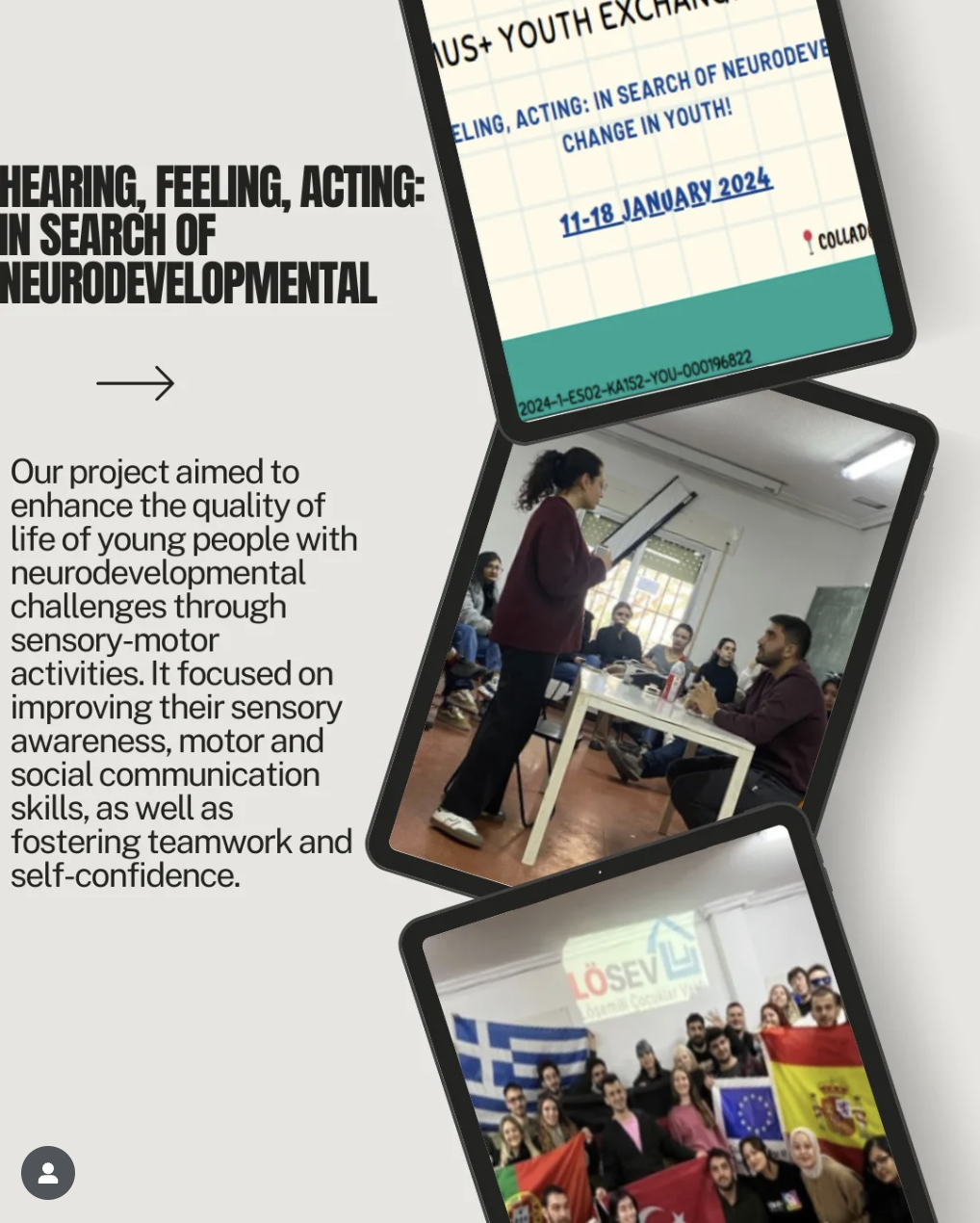
Young people and youth workers participated in this youth project supported by the Spanish National Agency (INJUVE) and the European Union.
The project aimed to ensure the effective use of sensory-motor activities to improve the quality of life for young people facing neurodevelopmental challenges. These young people had special needs that made them different from their peers in terms of individual characteristics and educational requirements. Through this initiative, the project sought to strengthen their sensory awareness, motor skills and social communication abilities, while improving daily life competencies, teamwork and self-confidence.
The specific objectives included increasing awareness of sensory and motor skills, enhancing motor abilities through structured exercises, introducing new methods and techniques based on experiential learning, and supporting teamwork and communication skills through group activities. By focusing on sensory development in areas such as touch, vision, hearing and smell, the project encouraged active participation and aimed to boost the self-esteem and independence of participants.
To achieve these goals, a series of workshops and interactive sessions were implemented. Participants took part in sessions such as “What is Sensory-Motor?” and “Basic Sensory Skills”, which introduced the concept and helped them practise skills through games and exercises. Other workshops addressed visual focus and attention, smell and memory development, and the application of sensory-motor techniques to daily life routines. Drama, music and art activities were incorporated to support creativity, empathy and emotional connection, while group games strengthened collaboration and social interaction. Cultural nights, Erasmus+ promotion sessions and daily evaluations complemented the learning process, ensuring both educational and intercultural outcomes.
The project involved 48 young participants aged 17–25 from six countries, including disadvantaged youth from low-income families, unemployed backgrounds and those with neurodevelopmental conditions. Leaders and facilitators ensured that participants were guided and supported, with special attention given to disadvantaged groups so they could benefit equally.
The results showed significant improvements in participants’ sensory and motor skills, enabling them to interact more effectively with their environments. Their communication and collaboration skills improved through drama, music and group-based workshops, making them more socially active and integrated. These developments also boosted self-esteem and confidence, helping them become more independent and self-assured. By engaging in sharing-oriented activities, young people developed a stronger sense of social responsibility and were motivated to apply the techniques they had learned within their communities.
Another important impact of the project was the increase in intercultural understanding. Bringing together youth from different countries enhanced their respect for diversity and promoted global perspectives. Participants not only learned about sensory-motor development but also exchanged cultural values, enriching the project with mutual understanding. The certificates and Youthpass they received documented their learning, providing advantages for future educational and career opportunities.
In conclusion, the project successfully combined educational innovation with social responsibility. By focusing on sensory-motor activities, it enabled young people with neurodevelopmental challenges to enhance their daily life skills, strengthen their communication and collaboration abilities and improve their overall quality of life. At the same time, it raised awareness of inclusion and diversity among all participants, creating long-term benefits for individuals, communities and partner organisations.